
How Google Ads Can Help Dental Clinics Get More Patients
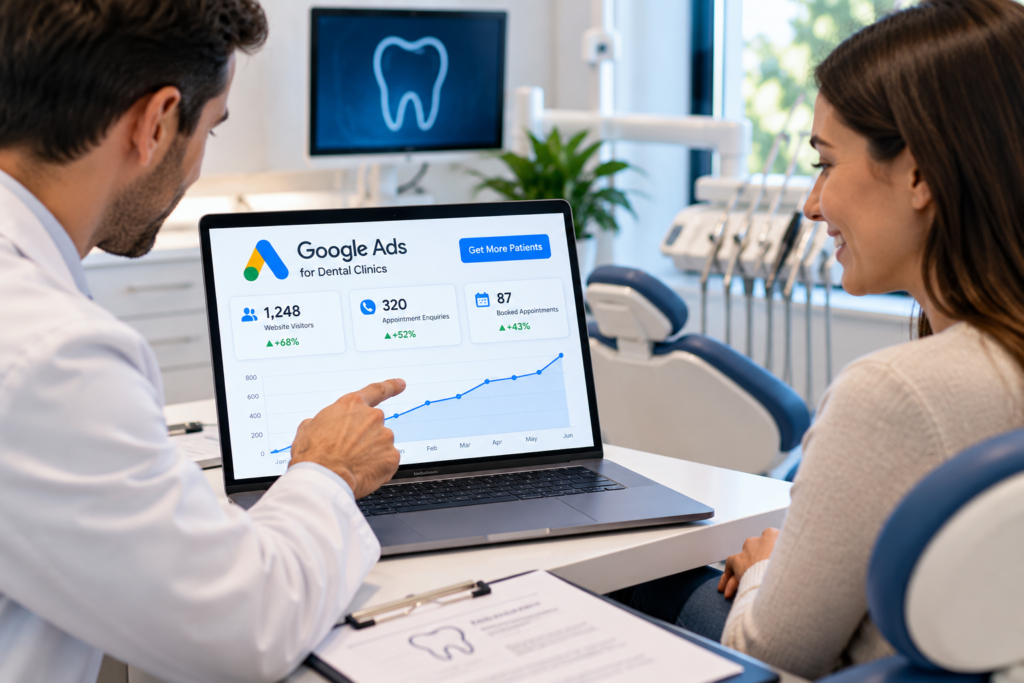
Turn Google Searches into Dental Appointments
Imagine a dental clinic running great Google Ads campaigns but still struggling to get new patient appointments. People click the ads, visit the website, and explore the services, yet many leave without contacting the clinic. The problem may not be the ads alone — it could be what happens after the click.
Google Ads for dentists can help attract patients who are actively searching for dental treatments. But to turn those clicks into real appointments, your clinic needs a clear message, a professional website, visible treatment information, and an easy way to book a consultation. When your dental marketing strategy combines targeted ads with a conversion-focused website, you can generate more qualified enquiries and make better use of your advertising budget.
How Google Ads Help Dentists Reach the Right Patients
When someone searches Google for a dentist, teeth whitening, dental implants, or emergency dental care, they are often looking for a solution they need soon. Google Ads can help your clinic appear in front of these potential patients at the right time.
Instead of waiting for people to discover your clinic, you can target relevant search terms, choose the locations you serve, and create ads around specific dental treatments. For example, a clinic offering dental implants can show ads to people searching for implant treatment in its service area.
The key is to focus on relevant searches rather than simply getting more clicks. Well-targeted dental Google Ads can bring more qualified visitors to your website and give potential patients a clear next step, such as calling your clinic or booking an appointment.
Which Google Ads Campaigns Work Best for Dentists?
Not every dental clinic needs the same advertising strategy. A clinic looking for more dental implant patients may need a different campaign from one trying to attract patients for routine check-ups or teeth whitening. Choosing the right Google Ads campaign starts with understanding your clinic’s goals and the treatments you want to promote.
Search campaigns are often a practical starting point because they can show your ads when people search for services such as “dentist near me” or “dental implants near me.” You can also create separate campaigns for high-value treatments, helping you measure which services generate the most relevant enquiries.
The goal is not to run every type of campaign at once. Start with the services your clinic wants to grow, target the locations you actually serve, and track calls and appointment enquiries to understand what is working.
How Much Should a Dental Clinic Spend on Google Ads?
One of the biggest questions dentists ask before starting Google Ads is how much they should spend. The answer depends on your location, competition, treatment prices, and the number of new patients your clinic wants to attract. A clinic in a competitive city may pay more per click than one targeting a smaller local area.
Rather than choosing a budget randomly, start with an amount your clinic can comfortably afford to test. Focus on a few important treatments, target patients in your service area, and review how many relevant calls and appointment enquiries your ads generate.
Remember, a bigger advertising budget does not automatically mean more patients. Your results also depend on the quality of your ads, the keywords you target, and the website experience after someone clicks. Tracking these factors helps you understand whether your Google Ads campaigns are generating valuable enquiries and where improvements are needed.
5 Google Ads Mistakes Dental Clinics Should Avoid
Google Ads can help dental clinics attract potential patients, but a few common mistakes can waste the advertising budget. The good news is that most of these problems can be avoided with careful planning and regular campaign reviews.
Targeting the wrong keywords: Broad or irrelevant searches may bring clicks from people who are not looking for your dental services.
Ignoring location targeting: If your clinic serves a specific area, your ads should focus on patients who can realistically visit your practice.
Sending visitors to the wrong page: An ad for dental implants should lead to a relevant implant treatment page, not a general page that makes patients search for the information themselves.
Making contact difficult: If visitors cannot easily find your phone number, treatment details, or appointment options, they may leave without contacting your clinic.
Not tracking conversions: Clicks alone do not tell you how many people called, submitted an enquiry, or booked an appointment. Tracking these actions helps you measure campaign performance.
Avoiding these mistakes gives your dental marketing strategy a stronger foundation and helps you make more informed decisions about your advertising budget.
How to Measure Google Ads Results for Your Dental Clinic
Running Google Ads is only the beginning. To understand whether your campaigns are helping your dental clinic grow, you need to look beyond clicks and impressions. What matters most is whether those clicks lead to genuine patient enquiries and booked appointments.
Start by tracking important actions, such as phone calls, appointment form submissions, and enquiries about specific treatments. Review which keywords and campaigns generate the most relevant leads, and compare the results with your advertising spend. This helps you identify where your budget is working well and where changes may be needed.
For example, a campaign might attract hundreds of website visitors but generate very few enquiries. Instead of increasing the budget immediately, review the search terms, ad message, landing page, and booking process to identify possible problems.
Regularly reviewing these results helps you make smarter decisions, improve campaign performance, and build a more effective dental patient acquisition strategy over time.
Grow Your Dental Practice with a Smarter Google Ads Strategy
Google Ads can help dental clinics reach people who are actively searching for dental treatments, attract relevant local visitors, and generate appointment enquiries. However, successful advertising requires more than just launching a campaign. The right keywords, local targeting, relevant landing pages, and consistent performance tracking all play an important role.
Every dental clinic has different goals, services, and marketing challenges. By understanding your audience, monitoring campaign results, and improving the patient journey, you can make more informed decisions about your advertising budget.
If your clinic wants to attract more potential patients online, start by reviewing your website, local visibility, and appointment booking process. Small, well-planned improvements can help create a stronger foundation for long-term growth.
Want to Attract More Patients to Your Dental Clinic?
Get a free review of your website and discover opportunities to improve your online visibility and patient enquiries.
Frequently Asked Questions About Google Ads for Dentists
1. Are Google Ads worth it for dental clinics?
Yes, Google Ads can help dental clinics reach people actively searching for dental treatments. Results depend on the targeting, advertising budget, competition, and website experience.
2. How much do Google Ads cost for dentists?
The cost depends on your location, competition, selected keywords, and campaign goals. Start with a manageable budget and track enquiries to understand your return on advertising spend.
3. Can Google Ads help dentists get local patients?
Yes, location targeting can help clinics reach potential patients in the areas they serve. Relevant keywords and treatment-specific landing pages can make campaigns more effective.
4. How long does it take for dental Google Ads to generate leads?
Ads may start receiving clicks soon after a campaign launches, but generating consistent, qualified enquiries can take time. Regular monitoring and optimisation help improve performance.
Stay connected with us on social media for the latest updates, insights, and tips.